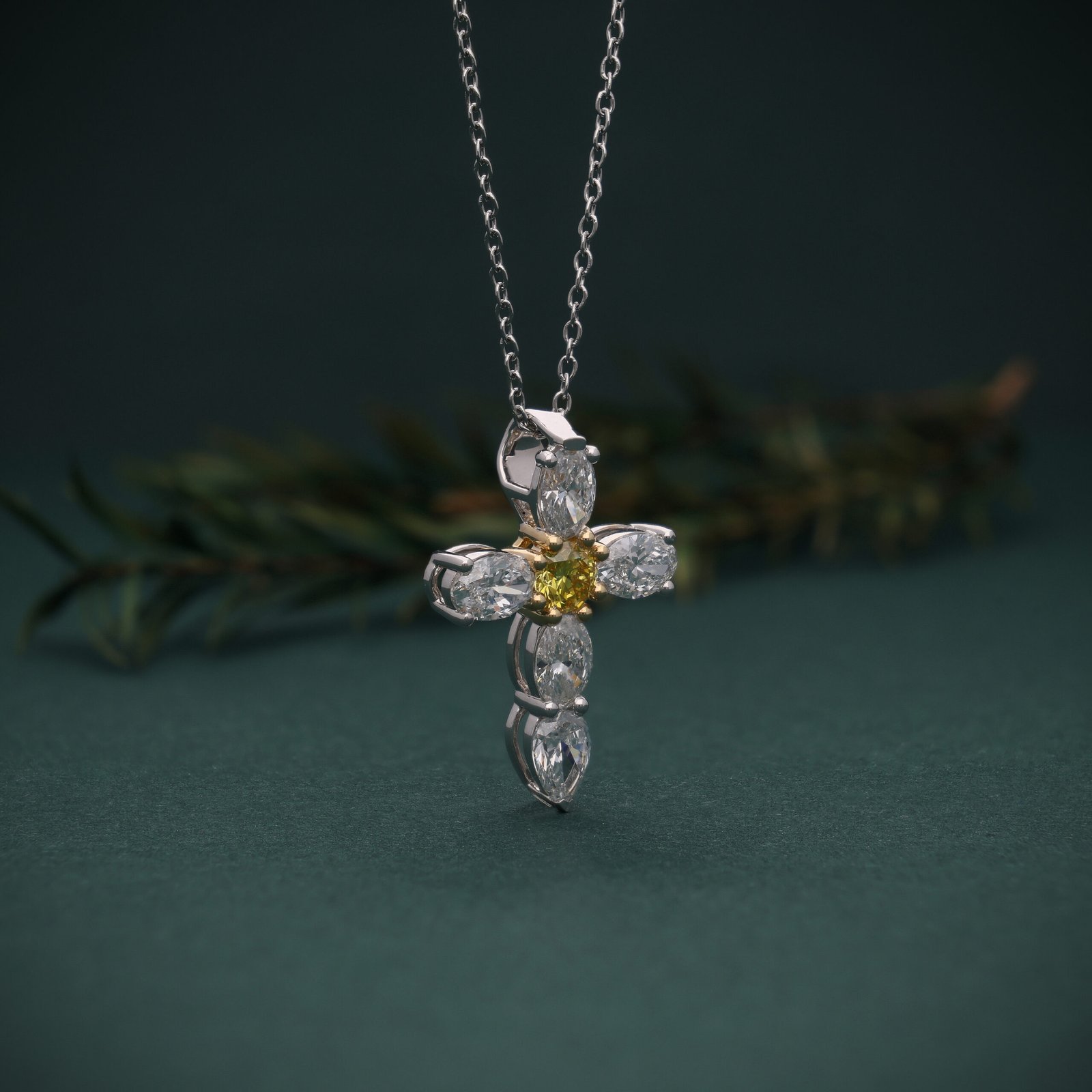
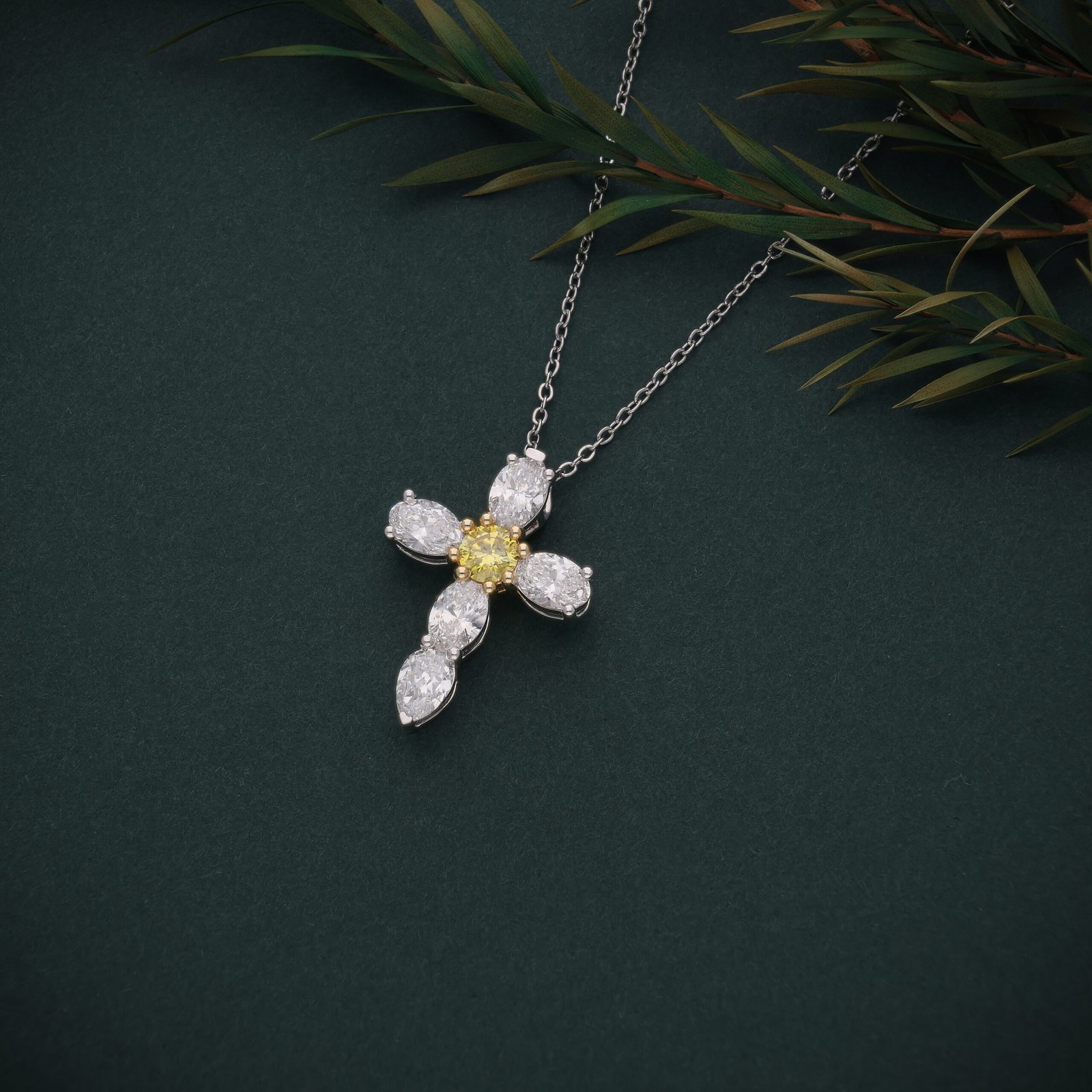
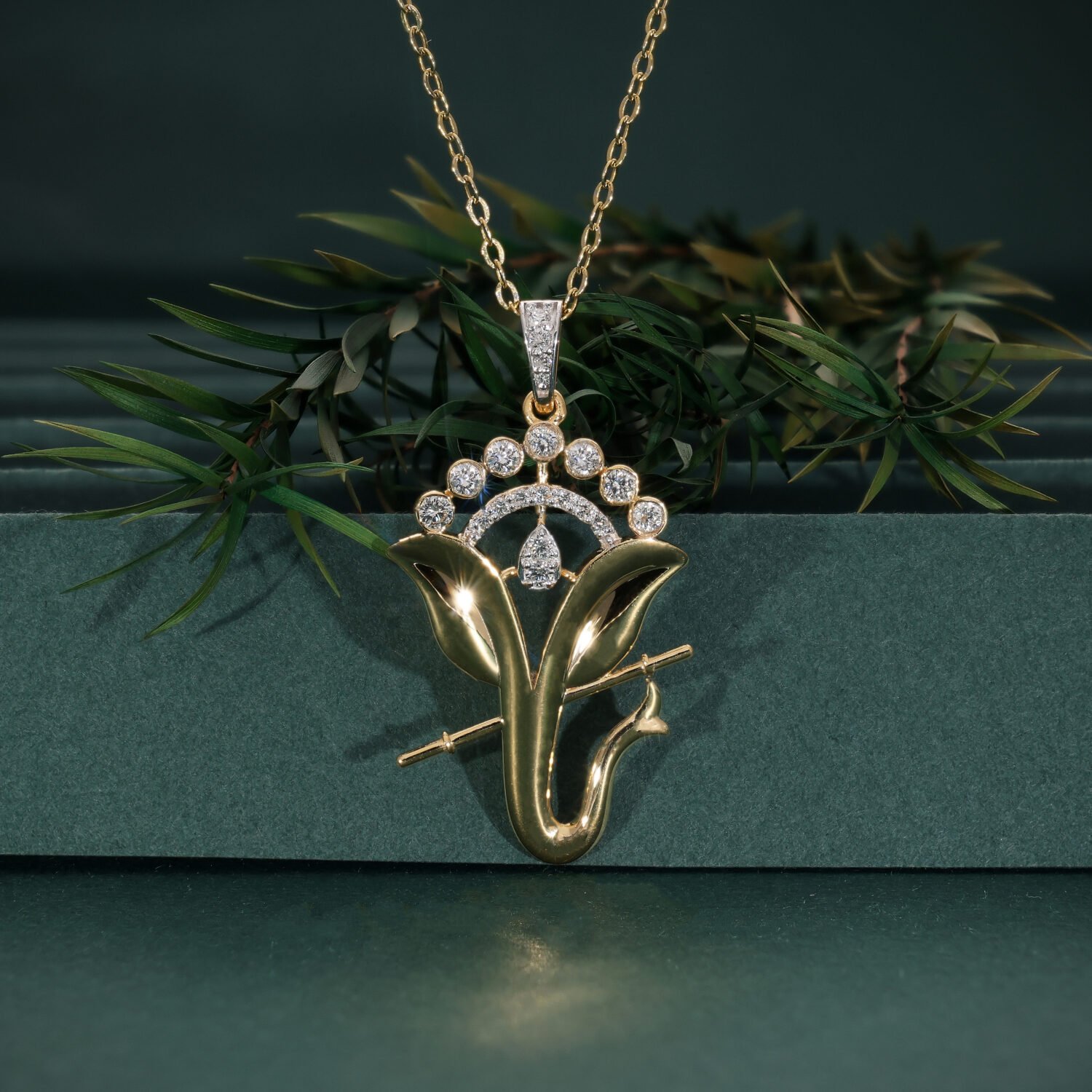
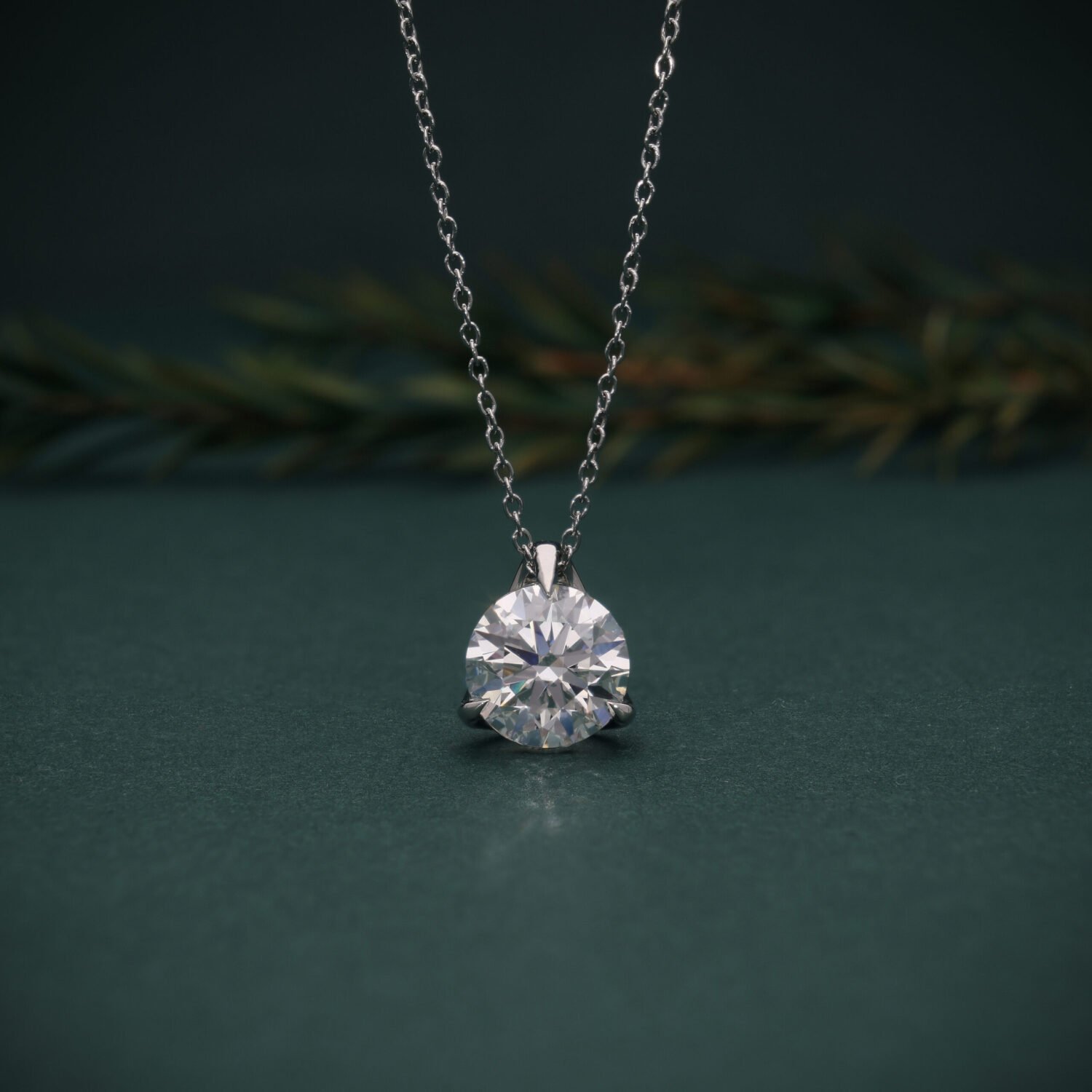
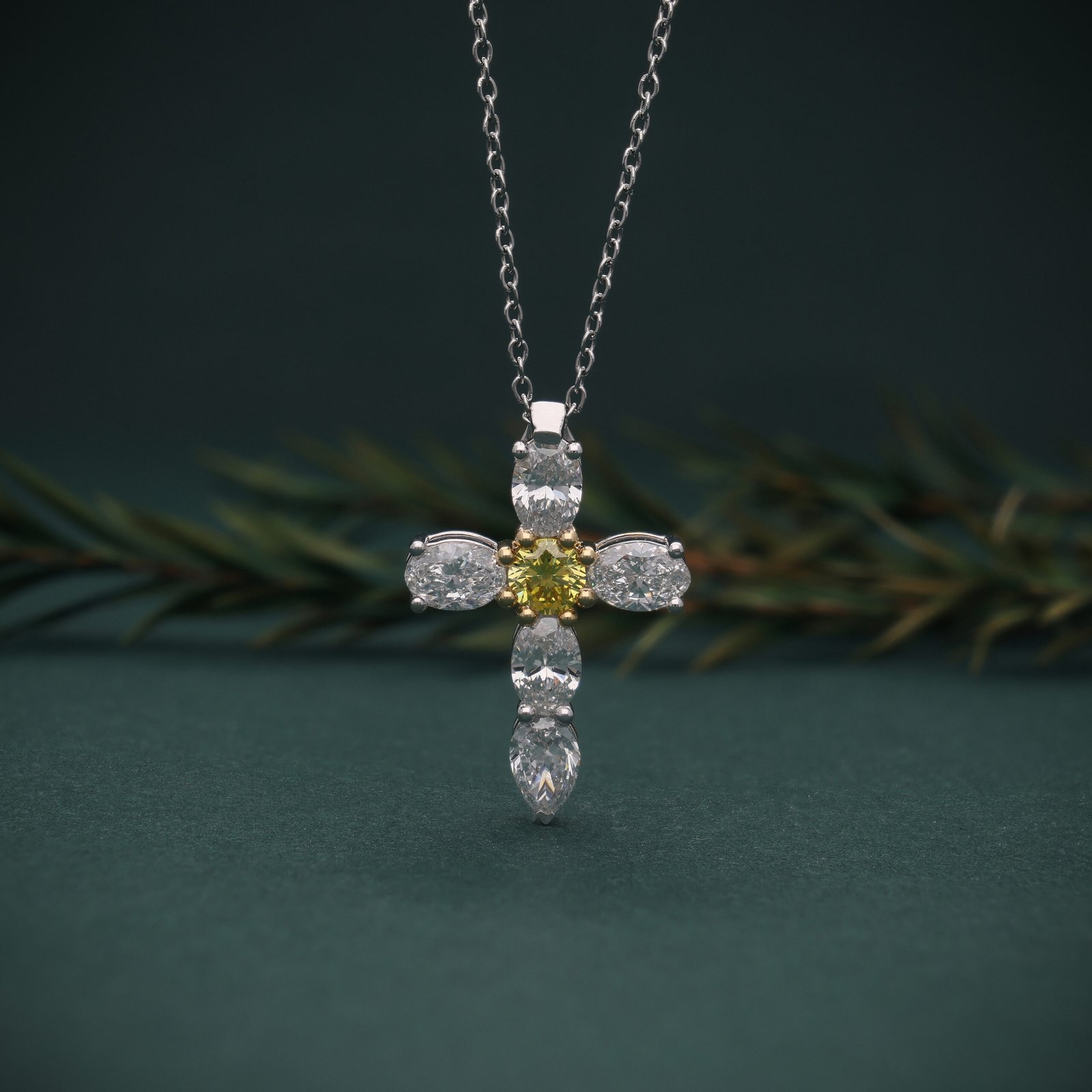
Aurora Marquise Diamond Cross Pendant in 18K White Gold

Crafted in luxurious 18K white gold, this exquisite diamond pendant is a stunning expression of elegance and sophistication. Showcasing a graceful arrangement of oval, pear, and round-shaped lab-grown diamonds, the design creates a mesmerizing play of light and brilliance from every angle. The harmonious combination of diamond cuts adds depth, dimension, and exceptional sparkle, making this pendant a true statement of refined luxury.

Metal Details:
Product Type: Pendant
Metal: 18K White Gold
Rhodium Finish: White Rhodium
Net Weight: 2.482 gm

Diamond Details (CVD Lab-Grown Diamonds)
Diamond Shapes: Oval, Pear & Round
Number of Diamonds: 6
Approx. Diamond Weight: 2.15 ct
Final Diamond Weight: 2.24 ct
Color Grade: EF
Clarity Grade: VVS-VS

Product Inquiry: 59 times Category

What are the 4C's of a diamond?

Cut – The Sparkle of the Diamond

Cut refers to how well a diamond has been shaped and faceted. It is considered the most important of the 4C’s because it directly affects the diamond’s brilliance and sparkle. A well-cut diamond reflects light beautifully, making it appear bright and lively. On the other hand, a poorly cut diamond may look dull even if it has excellent color and clarity. Diamond cut grades usually range from Excellent, Very Good, Good, Fair, to Poor. An Excellent Cut diamond reflects the maximum amount of light and gives the best sparkle. That is why experts often recommend prioritizing cut quality over the other C’s when shopping for a diamond.

Color – How White the Diamond Looks

Diamond color measures how colorless a diamond is. Most white diamonds are graded on a scale from D to Z. Diamonds closer to D are completely colorless and are considered more rare and valuable. As the scale moves toward Z, diamonds show more yellow or brown tint. Diamonds in the D-F range are called colorless and are highly premium. G-H diamonds are known as near colorless and are one of the most popular choices because they appear white to the naked eye while offering better value. Lower grades such as I-J may show slight warmth but are often chosen for budget-friendly jewelry.

Clarity – Natural Marks Inside the Diamond

Clarity refers to the presence of natural inclusions and blemishes in a diamond. Inclusions are tiny marks inside the diamond, while blemishes are found on the surface. Since natural diamonds are formed deep inside the earth under extreme pressure, most diamonds contain some imperfections. Clarity grades range from Flawless (FL) to Included (I). Higher clarity diamonds such as VVS and VS have very tiny inclusions that are difficult to see even under magnification. SI clarity diamonds may contain small inclusions, but many of them still appear clean to the naked eye and provide excellent value for money.

Carat – The Weight of the Diamond

Carat refers to the weight of a diamond rather than its exact physical size, and one carat is equal to 200 milligrams. Larger carat diamonds are generally more rare and valuable, making them more expensive in the jewelry market. However, two diamonds with the same carat weight can appear different in size because of their cut and proportions. A well-cut diamond often looks bigger and more brilliant than a poorly cut diamond of the same weight. Popular diamond sizes include 0.25 carat, 0.50 carat, and 1 carat. Among these, a 1 carat diamond is considered a timeless and luxurious choice for engagement rings and fine jewelry.